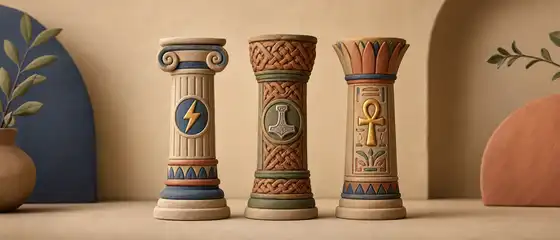
Gods of Greek Mythology: Power, Wisdom and Passion
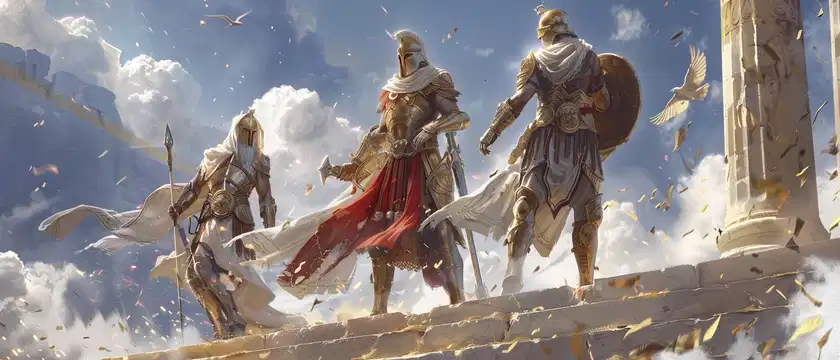
Greek gods rule over the forces of the world, but in myths they also argue, fall in love and stand up for their own interests. Many are associated with Mount Olympus, though not all the important deities live there. Their personalities come through especially clearly in stories about their encounters with heroes and mortals.
- Zeus — god of the sky and thunder, and the supreme ruler of the Olympians. His symbols are the thunderbolt and the eagle. He establishes order and settles disputes, but he doesn’t always act fairly himself: his rule is marked by jealousy, anger and countless love affairs. Zeus’s story offers a chance to reflect on how a leader’s decisions affect others.
- Hera — goddess of marriage and Zeus’s wife. In myths, she defends her status and often pursues her husband’s rivals and children. Her determination is striking, though the ways she protects her interests can be cruel. Hera’s symbols are the peacock and the crown.
- Athena — goddess of wisdom, crafts and military strategy. Unlike the idea of battle as a burst of rage, she represents considered action. Athena helps Odysseus, famed for his ingenuity. Her attributes include the owl, the helmet and the olive tree.
- Apollo is associated with music, prophecy and light. His lyre evokes a pursuit of skill and harmony, but in myths the god can also be merciless. He’s an image of someone who values talent and clear rules, yet may struggle when their authority is challenged.
- Artemis — goddess of the hunt and protector of the wilderness. She values independence and defends her boundaries. Her bow and her companions, the nymphs, make her easy to recognize in art. In stories about Artemis, strength is shown not only in attack, but also in refusing to submit to others’ expectations.
- Hades — ruler of the underworld and the dead, and brother of Zeus. He is often mistaken for the embodiment of evil, but in Greek tradition he is first and foremost the ruler of a particular realm. The story of Persephone reveals both the severity of his rule and the complexity of myths about marriage, loss and return.
The same god can act differently in different stories: myths took shape and were retold over many generations. So it’s more useful to look for conflicts between values than for a perfect role model. Athena, for example, helps a hero win through wit, while Hera shows how the desire to protect what matters can turn into revenge.
Norse Gods: Courage in the Face of Fate
Norse gods are known from Old Norse sources, including poetic and prose texts recorded in the Middle Ages. Among them are the Æsir and the Vanir, two groups of deities who made peace in the myths. One important feature of these stories is that even the gods are not all-powerful, and they know that Ragnarök is coming.
- Odin — a god associated with wisdom, war, poetry and magical knowledge. He gave up an eye for the chance to drink from the well of wisdom, and in another story gained knowledge of the runes through a trial. His companions are the ravens Huginn and Muninn. Odin speaks to curiosity, but also to the high price one may pay for knowledge.
- Thor — god of thunder and protector of gods and humans from giants. His chief weapon is the hammer Mjölnir. Thor acts directly, values strength and is ready to stand up for his people. In everyday life, that’s like rushing to help a friend—though sometimes it’s worth getting the details first.
- Freyja — a goddess associated with love, fertility and the magic of seiðr. She also receives a share of those who fall in battle. Freyja’s image brings together beauty, independence and strength: she is much more than a goddess of love. Among other things, she is accompanied by cats that pull her chariot.
- Freyr — god of fertility, prosperity and peace, and Freyja’s brother. He is associated with harvests and abundance, and one of his best-known symbols is the boar. His character can be compared to the ability to create conditions in which others can live and work well.
- Loki — a cunning companion of the gods and a trickster whose origins and status are more complex than a simple division between gods and giants. Sometimes he helps the Æsir out of trouble; sometimes he causes it himself. Loki shows how resourcefulness without responsibility can destroy trust.
- Hel — ruler of the realm of the dead that bears her name, and Loki’s daughter. Her realm shouldn’t automatically be equated with the Christian Hell: it is a different mythological idea. Hel represents the inevitable boundary between life and death, not simply punishment for wrongdoing.
These characters are compelling because they combine strength with vulnerability. Thor can defeat a giant, yet still fall victim to deception; Odin seeks knowledge, though it cannot change fate. If you’re drawn to stories about making choices in difficult circumstances, try our quiz about characters from ancient legends too.
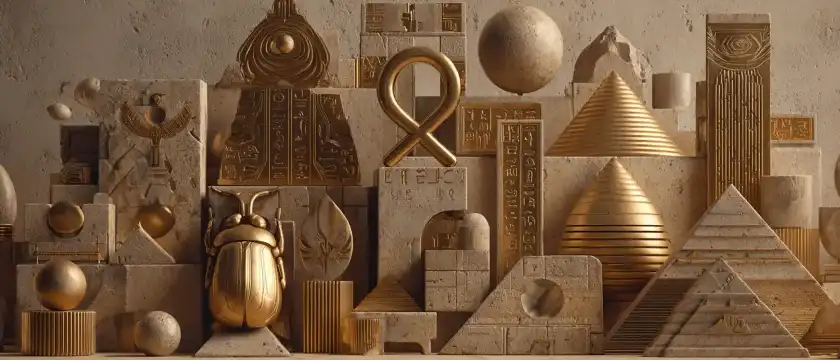
Egyptian gods are associated with the sun, the Nile, kingship, protection and ideas about life after death. They could be depicted with human bodies and the heads of animals or birds. A god could also take different forms, and local traditions and versions of myths varied.
- Ra — sun god, often depicted with a falcon’s head and a solar disk. His daily journey across the sky and nightly passage through the underworld express the ideas of repetition and renewal. His story makes it easy to see the power of steady effort: results come not from a single heroic act, but from action repeated over time.
- Isis — goddess of magic, motherhood and protection. In a well-known myth, she helps bring her husband Osiris back to life and protects their son Horus. Her strength lies in knowledge, persistence and care, especially when the familiar order has been shattered.
- Osiris — god of the afterlife, also associated with rebirth. According to myth, he is killed by his brother Set and becomes ruler of the underworld. His story doesn’t promise a simple return to life as it was; it is more about transition and continued existence in another form.
- Horus — god of the sky, often depicted as a falcon or as a human with a falcon’s head. In stories about his struggle with Set, he defends Osiris’s legacy. Horus is associated with kingship, and his eye became a well-known protective symbol. His story raises the question of how to reclaim your place after a long conflict.
- Set — god associated with the desert, storms and disruption of order. In the story of Osiris, he is his brother’s and Horus’s adversary, but in other contexts he protects Ra’s solar barque from the serpent Apophis. So calling Set simply an evil god would be an oversimplification.
- Anubis — a god with the head of a jackal, associated with funerary rites and the protection of the dead. In depictions of the judgment of the dead, he takes part in the weighing of the heart. His image evokes not so much the terror of death as careful guidance and respect for important rites.
- Thoth — god of writing, knowledge and calculation, often depicted with the head of an ibis. He is associated with record-keeping and establishing order through words and numbers. In everyday life, his traits might look like a love of precision and the ability to calmly make sense of complex information.
- Bastet — goddess of protection, often depicted as a cat or a woman with a cat’s head. Her image combines domestic comfort with a readiness to defend. She’s a reminder that gentleness and resolve don’t have to be opposites.
An important concept in Egyptian tradition is ma’at—order and justice, opposed to chaos. Myths and rituals helped people make sense of the need to maintain this order. Test what you know about the gods, pyramids and other aspects of ancient culture with our Ancient Egypt quiz.
Comparing gods doesn’t mean that deities from different cultures are interchangeable. Zeus and Thor are both associated with thunder, but Zeus is first and foremost a supreme ruler, while Thor is known as a protector. A shared symbol doesn’t make their roles the same.
As you explore the myths and take the quiz, it can help to think about a few different ways of acting:
- Making decisions. Do you prefer to gather information first, like Athena or Thoth, or step in quickly, like Thor? On a work project, the first approach can help you spot risks, while the second ensures a problem isn’t left unanswered.
- Helping others. Isis shows the strength of persistent care, while Freyr is associated with prosperity and fertility. Support can mean offering personal help in a crisis or creating stable conditions for the whole team.
- Dealing with rules. Zeus and the Egyptian idea of ma’at are associated with order, while Loki tests the limits of what’s acceptable. A fresh perspective can sometimes reveal a way forward, but it’s worth asking who will be responsible for the consequences of an experiment.
- Handling change. The story of Osiris is about transition, while the myths of Odin are about seeking knowledge in a world with an inevitable end. In everyday life, this might mean choosing between trying to preserve the past and finding meaning in new circumstances.
You don’t have to choose just one trait: in different situations, you can be both a cautious strategist and a determined protector. The quiz offers a playful interpretation, not a historical personality profile. For another imaginary journey, try our quiz about the afterlife.
Frequently Asked Questions
Who is the most powerful Greek god?
Zeus is considered the supreme god of the Olympians and ruler of the sky and thunder. Poseidon rules the sea, while Hades rules the underworld; each has power over a different part of the world.
How are Norse gods different from Greek gods?
Norse myths place particular emphasis on fate and Ragnarök, which even the gods cannot fully prevent. Greek myths often focus on rivalries among the gods, heroes and the consequences of their actions. This is a broad comparison: both traditions are diverse.
Why were Egyptian gods depicted with animal heads?
Animal imagery helped express the qualities and associations of deities: for example, the falcon was associated with Horus, and the jackal with Anubis. These images were symbolic and could vary depending on the time and place.
Can mythological gods be considered role models?
Their stories are worth discussing, but gods often act cruelly or inconsistently. It’s better to see them as complex figures through which cultures explored power, duty, fear and hope.
Athena’s wisdom, Thor’s directness or Isis’s persistence—each figure has a familiar trait that can prompt you to look at your own decisions in a new way. Take our main quiz, “Which Mythological God or Goddess Are You?” and find out what result you get.
If you’d like to continue exploring legends and history, choose a quiz from the collection: