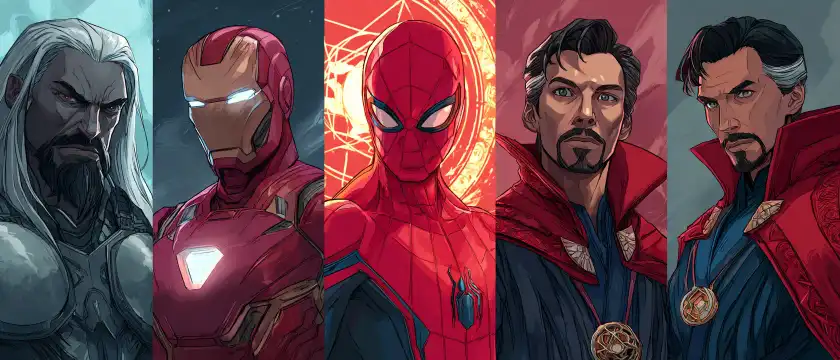
What Drives Marvel's Superheroes
The psychology of superheroes starts with a simple question: what is the character acting for? One wants to protect loved ones, another to restore justice, while a third wants to prove their worth. A hero can have several motives at once, and they don’t always sit easily together.
For example, the desire to help can clash with the need to control everything. Someone takes on a difficult task to save a team project, but won’t delegate: what if everyone else does a worse job? The intention may be good, but the result can wear everyone down. Marvel stories simply set these kinds of contradictions against battles for the fate of the world.
It helps to distinguish three things: a value is what a hero considers important; a motive is what they want to achieve; and an approach is how they try to achieve it. Steve values freedom, wants to protect people and often acts head-on. Loki also seeks freedom and recognition, but often resorts to cunning. Sharing a goal doesn’t mean sharing the same methods.
Heroes also change. You can’t reduce them to a single trait: Tony’s sarcasm doesn’t cancel out his care for others, and Steve’s strong principles don’t mean decisions are always easy for him. What’s more interesting is seeing how their character comes through in different circumstances.
Tony Stark and Steve Rogers: Responsibility vs. Duty?
Tony Stark: Make Amends and Prevent Harm
At the start of his story, Tony is a successful inventor and weapons manufacturer who relies on his intelligence and charm. When he confronts the consequences of his company’s work, he changes its direction and creates the Iron Man suit. For him, responsibility isn’t an abstract idea; it’s a task: spot a problem and build a solution.
Tony’s strength is his ability to act when the usual plan stops working. But that approach comes at a cost: trying to prevent a threat can turn into an attempt to plan everything for everyone else. The story of Age of Ultron shows how an ambitious plan to protect the world, carried out without enough agreement from the team, creates a new danger.
In everyday life, something similar can happen when you respond to a mistake by adding more and more checks. They help for a while, but eventually approving every little thing starts to slow the work down. A useful question to ask is: am I really reducing risk, or am I trying to get rid of the feeling of uncertainty? Sometimes the next step isn’t another spreadsheet, but a conversation with your colleagues about which checks are actually needed.
Steve Rogers: Stay True to Your Principles
Steve’s appeal isn’t just the strength that comes with being Captain America. Even before he gains his powers, he tries to protect those who are weaker and refuses to back down in the face of injustice. What matters to him isn’t simply following orders, but understanding whether they serve what needs protecting.
In Captain America: Civil War, this stance becomes a source of conflict: Steve worries that outside oversight could limit the team’s actions or send them in the wrong direction. His choice isn’t simply a rejection of rules. Rather, he doesn’t want to hand moral responsibility over to a title or an organization.
In everyday life, a similar choice might come up when a decision made by your team seems unfair to a client. Standing by your principles doesn’t mean you have to argue loudly. You can check the facts, explain the risk and suggest another option. The downside of being principled is assuming your own judgment doesn’t need to be questioned. Convictions work better when there’s still room for other people’s arguments.
Loki and Natasha Romanoff: Recognition and Trust
Loki: The Need to Be Seen
Loki often acts in ways that make it impossible to ignore him. His rivalry with Thor, family secrets and questions about his origins make recognition especially important to him. He wants to influence events, but his methods—deception and manipulation—often destroy the very trust he lacks.
This doesn’t excuse his actions; it helps explain the thinking behind them. When someone feels their worth is measured against other people’s successes, it can be tempting to seek attention at any cost. For example, in a meeting you might dismiss someone else’s idea with a witty remark because your own suggestion went unnoticed. A more direct approach is to return to your idea and explain what problem it solves.
Loki’s story is also interesting because he can change roles: in some situations, he becomes an ally instead of a rival or enemy. But trust doesn’t appear at the snap of a finger. Words need to be backed up by choices, especially when betrayal would be more profitable.
Natasha Romanoff: Your Past Doesn’t Define Your Future
Natasha knows how to observe, gather information and stay composed. Her past is tied to violence and work for dangerous organizations, but she doesn’t want to define herself solely by what she did before. In the Avengers, what matters to her isn’t just the missions, but also the relationships that gradually become a source of support.
Her story shows the difference between keeping your guard up as a skill and being unable to trust. Caution can be useful: you don’t have to tell every person you meet everything about yourself right away. But if you never ask for help or admit to mistakes, it’s hard for the people close to you to know what’s going on. In real life, you can start small: tell someone you trust what kind of support you need right now instead of waiting for them to guess.
How to Find Your Similarities with Marvel Characters
It’s more useful to see a quiz result as a prompt to notice your usual reactions than as a label. You might recognize Tony’s ingenuity in yourself while also valuing the loyalty to the team that matters to Natasha. Resembling a hero doesn’t mean you agree with every choice they make.
To answer “Which Marvel character am I?” a little more thoughtfully, think of a recent situation where you had to make a choice. It could be a disagreement about deadlines, helping a friend or deciding to change your usual plan. Then break it down step by step:
- Name your goal. Were you trying to solve a problem, preserve a relationship, protect your boundaries or gain recognition? Several goals can matter at once.
- Look at what you did. Did you suggest a plan right away, get other people’s opinions first or prefer to observe? Distinguish what you did from what you intended to do.
- Consider the consequences. What was the outcome for you and for others? For example, a quick decision saved time but overlooked an important detail.
- Choose an alternative. Imagine another way to reach the same goal: ask for help, ask a question or state your conditions earlier.
Say a friend cancels your plans at the last minute. A Tony-like response might be a joke masking irritation; a Steve-like one might be a direct conversation about the agreement; a Natasha-like one might be to pause and first find out what happened. None of these reactions guarantees a better outcome. What matters is understanding whether your approach helps you express your needs and hear the other person.
Different fictional worlds offer different ways to think about these questions. The Hogwarts house quiz focuses on values and strengths, while the Star Wars quiz invites you to think about choices, purpose and your relationship with power. If you’re drawn to stories about loyalty and temptation, try the Lord of the Rings quiz.
These comparisons don’t measure personality with scientific accuracy: the result depends on the questions and your answers at a particular moment. An entertainment quiz is no substitute for consulting a mental health professional.
Frequently Asked Questions
How do I find out which Marvel character I am?
Answer the 12 questions in the main quiz about your reactions and preferences. Your result will suggest which hero you have the most in common with based on the traits covered in the quiz.
Why do I relate to more than one character?
Different sides of your personality show up in different situations. You might value order like Steve while also looking for unconventional solutions like Tony. The characters themselves can’t be reduced to one trait either.
Does relating to Loki mean I’m prone to lying?
No. Your result might reflect a love of independence, resourcefulness or a desire for recognition—not every action the character takes. It’s up to you how you use your strengths.
Can my quiz result change?
Yes. Your answers depend on your experiences, mood and how you interpret the questions. You can take the quiz again to compare your reactions, rather than look for one “right” result.
Conclusion: The Hero May Be Closer Than You Think
Marvel characters offer an unusual perspective on familiar motives: responsibility can be inspiring and exhausting, principles can provide support but also need to be questioned, and trust takes time to build. Take the “Which Marvel Character Are You?” quiz to find out which hero’s personality your answers echo.
And if you’d like to keep exploring fictional worlds, take a look at this collection: