What Is an Aura, and Where Do Its Colors Come From?
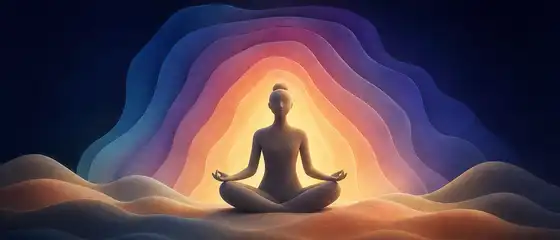
In esoteric beliefs, an aura is an invisible field around a person. It’s said to have colors that reflect aspects of someone’s personality or inner state. For example, a bright shade might be associated with energy, while a soft, cool one might suggest a desire for peace.
It’s important to distinguish between a symbol and a scientific fact: the existence of an aura as a colorful energy field that can reveal someone’s personality or health hasn’t been scientifically confirmed. An aura quiz doesn’t measure such a field: it offers a fun result based on your answers.
That said, colors really can bring certain associations to mind. If you’re drawn to red, you might use it as a symbol of determination; if you like blue, it might remind you of the importance of taking a pause. These aren’t universal rules: one person sees courage in red, another sees irritation, and a third simply thinks of their favorite sweater.
So instead of asking, “What does my color prove about me?” it may be more useful to ask, “Which part of this description resonates with me?” This approach leaves room for both curiosity and doubt.
Aura Colors and Their Meanings
Below are some common symbolic interpretations. Think of them as prompts for reflection, not judgments about a person. Every shade has strengths, as well as situations in which the qualities it represents can get in the way.
Red Aura: Action and Determination
Red is usually associated with drive, courage, and a desire to take action. This image fits someone who’s more likely to suggest a plan than wait around for perfect conditions. For example, if your train is canceled during a trip, you immediately look for a new route instead of putting off a decision until the last minute.
The flip side of this symbol is impulsiveness. Trying to fix everything quickly can sometimes make it harder to hear others or notice when you’re tired. If red resonates with you, try asking yourself before making an important decision: am I acting because the time is right, or because I just don’t like waiting?
Blue Aura: Calm and Clarity
Blue is often associated with composure, attentive listening, and a desire for honest conversations. In a group, you might be the person others turn to when they need to talk through a difficult situation: you don’t interrupt, and you help them sort through what happened.
But a calm tone doesn’t mean you don’t have your own wants and needs. Sometimes, the desire to keep the peace can hide a habit of giving in. A useful question for the “blue” image: do you really agree with the suggestion, or do you just not want to argue? You can be gentle and still make your boundaries clear.
Purple Aura: Imagination and the Search for Meaning
Purple is associated with curiosity, creative thinking, and an interest in unusual ideas. Maybe you enjoy spotting unexpected connections: a story you hear sparks an idea for a drawing, or an ordinary walk turns into a reflection on the future.
The challenge comes when there are so many interesting possibilities that it’s hard to choose just one. If this description sounds familiar, try writing your ideas down and picking one small next step for each. And if you enjoy magical imagery, you can also find out what kind of witch you are: it’s another fun way to explore your habits.
Gold Aura: Inspiration and Generosity
Gold is usually interpreted as a symbol of inner strength, inspiration, and a willingness to share. In everyday life, this might show up in simple ways: you notice a colleague’s good idea, encourage a new team member, or help friends see the meaning in a shared project.
Gold is sometimes associated with being exceptionally special, but there’s no need to take that literally. This color doesn’t make anyone wiser or better than others. If the image of generosity resonates with you, pay attention to your own resources, too: it’s easier to support others when you don’t promise more than you can deliver.
Green Aura: Care and Renewal
Green is associated with growth, patience, and attentiveness to needs—your own and other people’s. For example, after a stressful week, you don’t fill your weekend with errands; instead, you make time for a walk, cooking, or a quiet get-together with loved ones.
Care can turn into overwhelm if you’re constantly taking care of other people’s problems. The green symbol is a reminder that helping doesn’t mean being available every minute. Sometimes it’s better to ask what kind of support someone needs and be honest about how much energy you have right now.
Yellow Aura: Curiosity and Connection
Yellow is associated with optimism, an interest in new things, and an easygoing conversational style. This image might suit someone who likes asking questions on a tour, meeting new people, or trying a new hobby without feeling they have to achieve anything right away.
Still, you’re not obliged to be cheerful all the time. If yellow resonates with you, you can still get tired and prefer some quiet. And when your attention is split between lots of interests, a simple question can help: which one would you like to continue with this week?
Orange Aura: Enthusiasm and Change
Orange is associated with enthusiasm, sociability, and a love of new experiences. For example, you might be happy to try an unfamiliar dish, suggest a new kind of get-together with friends, or sign up for an activity that’s always sounded interesting.
It’s useful to distinguish genuine interest from saying yes to everything. Before adding another event to your calendar, check whether you’ll still have room for rest and the commitments you’ve already made. New experiences are more enjoyable when you don’t have to rush through them.
Pink and White Auras: Connection and New Beginnings
Pink is often described in terms of tenderness, acceptance, and care for relationships. White is associated with clarity, simplicity, and a desire for a fresh start. For example, one image might bring to mind a warm conversation with a friend, while the other might remind you to finally clear off your cluttered desk.
Neither color means perfection. You can value closeness and still need time alone; you can dream of a fresh start and have doubts at the same time. Symbols are useful when they don’t demand that you live up to an ideal image.
How to Find Out What Color Your Aura Is
If you’re looking for an answer to “What color is my aura?”, start by noticing your preferences and reactions rather than trying to see a glow. There’s no reliable scientific way to measure an aura’s color, but it’s certainly possible to choose a metaphor that feels right.
- Think of a recent situation. What did you do when plans changed: find a solution quickly, calmly talk through the options, or suggest an unexpected idea?
- Look for recurring qualities. One action doesn’t define your personality. Notice what tends to come up at work, during downtime, and in your relationships, while remembering that your answers may vary in different situations.
- Choose an image that feels right. If determination and action matter to you, red might resonate. If it’s curiosity and conversation, it could be yellow. It’s also fine to relate to several colors at once.
- Take an aura quiz. Your answers to 12 questions can help you compare your usual reactions with playful descriptions of different colors. Choose what feels closest to you right now, rather than what seems like the prettiest result.
- Read your result critically. Pick out one thought that feels spot-on and one that you’re not sure about. The result doesn’t have to tell you everything about yourself or limit your choices.
You’ll find photos and apps online that promise to show your aura. They may create a striking colored glow, but it can’t reliably reveal someone’s personality or health. The impression of a colored outline can also be caused by lighting and the way we see things.
How to Use Your Color in Everyday Life
You can turn your quiz result into a small self-discovery exercise. Say you got blue: think about where your listening skills help, and where you might want to speak up about your own needs sooner. If your result is gold, consider what kind of support you enjoy giving others and what kind you need yourself.
Try writing down three short sentences: “What resonated with me was…”, “I’d disagree with…”, and “This week, I’ll try…”. The last one can be something very specific: waiting until morning to reply, sharing an idea in a meeting, or keeping an evening free of plans. This kind of experiment is more useful than trying to shape your whole life around a color description.
If the result didn’t match your expectations, there’s no need to pick the “right” one. Maybe the questions reminded you of a side of your personality that only comes out in certain situations. You can take the quiz again later and compare your answers, keeping in mind that it’s a game, not a personality assessment.
If you enjoy symbolic quizzes, you might also like “Are You an Old Soul?” and “Who Were You in a Past Life?”. They invite you to imagine who you are, rather than determine the age of your soul or facts about your past.
Frequently Asked Questions
Can your aura color change?
In some esoteric interpretations, color is linked to your current state, so it’s considered changeable. Your result on a fun quiz can also differ if you answer differently. That doesn’t prove that any kind of field has changed.
What is the strongest aura color?
There’s no universally accepted scale of strength. Red might be called energetic and gold inspiring, but these are different symbolic qualities, not rankings. It’s more useful to choose a description that helps you understand your reactions better.
Can you identify an aura from a photo?
There’s no reliable way to identify someone’s aura color or personality from a photo. Among other things, the colors in an image depend on the lighting, camera, and editing. Treat these images as visual entertainment.
Can an aura reveal anything about your health?
Aura color isn’t a reliable indicator of health. A quiz is no substitute for consulting a professional.
Which Color Resonates With You?
Red, blue, purple, gold, and other aura colors are symbolic images, not labels. Take the “What Color Is Your Aura?” quiz to get your result and see which parts of it feel right to you.
If you’d like to keep exploring yourself in a fun way, check out this collection: