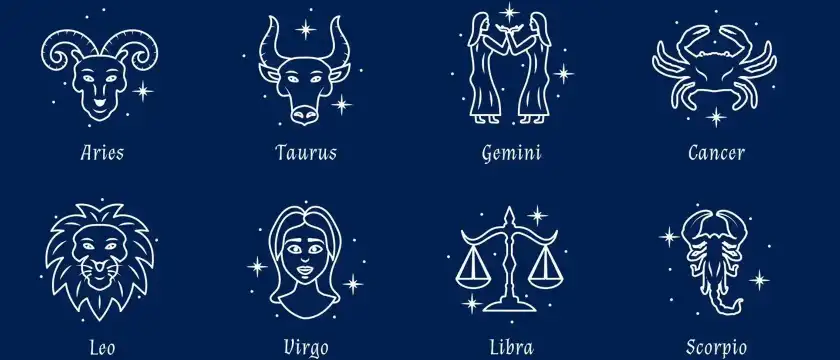
Your horoscope says you value closeness but sometimes need time alone. Sound familiar? Probably: a description like that could fit plenty of people. The Barnum effect is our tendency to see general, vague statements as an accurate description of ourselves in particular.
It helps explain why people believe in horoscopes: familiar situations, flattering language and lucky coincidences can create the feeling that a prediction really hits home. But an interest in astrology doesn’t necessarily mean taking predictions literally—for many people, it’s a game, a way to talk about themselves or simply an enjoyable read.
Try looking at your relationships from a playful angle: take a zodiac sign compatibility test.
What Is the Barnum Effect?
Imagine getting this result after a short quiz: “You’re good at supporting others, though you’re not always ready to share what you’re going through.” It sounds personal, but it doesn’t say in what situations, how often or compared with whom. It’s easy to think of examples from your own life—from a conversation with a friend to something that happened at work.
The effect is also known as the Forer effect. Psychologist Bertram Forer asked students to rate personality profiles they were told had been created just for them. In fact, everyone received the same text, and many thought it was accurate. This well-known experiment shows that recognizing yourself in a description doesn’t, by itself, prove that it’s unique to you.
These kinds of descriptions often pair opposites: “You’re sociable, but sometimes prefer to be alone.” They cover different moods that most people recognize. Add words like “sometimes,” “you may” or “deep down,” and the statement becomes even harder to disprove.
Still, not every coincidence can be explained by the Barnum effect. A description might be accurate because the person who wrote it really knows you—or simply by chance. The important thing is to ask how specific the statement is and whether it would fit other people just as well.
Why People Believe in Horoscopes
The Barnum effect is only part of the answer. The psychology behind astrology also has to do with how we notice information, remember events and look for meaning in them.
- We notice evidence that confirms what we believe. If a forecast promised an interesting encounter, a chance conversation at a café can easily seem like it came true. Days when nothing similar happened may soon be forgotten. This is an example of confirmation bias: our tendency to look for evidence that supports what we already believe.
- We fill in the meaning ourselves. “An opportunity will come up soon” could mean a project offer, an invitation to go for a walk or a discount on a course. The broader the wording, the more events we can connect to it.
- Personal context makes an impression. Referring to your sign, birth date or relationships can make a text feel as though it was written just for you, even if thousands of people are reading it.
- Coincidences stand out emotionally. We especially remember a prediction that seems to have anticipated an important conversation. Unsuccessful predictions, on the other hand, are easy to forget—or to reinterpret as meaning something else.
- A prediction can influence our behavior. If you read that it’s a good day to meet people, you may start more conversations. If one goes well, it doesn’t necessarily mean the stars were at work: your own initiative may have played a part.
Horoscopes also offer a handy language for talking about uncertainty. A prediction about change might prompt you to think about work, while a description of compatibility could start a conversation with your partner. The value of that conversation doesn’t prove the astrological prediction is accurate: sometimes even a random prompt can spark a useful thought.
What It Looks Like in Everyday Life
Daily Horoscope
You read: “Unexpected news may come your way today, but don’t rush to conclusions.” Later, a colleague reschedules a meeting, and the prediction seems to have come true. But almost any message could count as news, and the advice not to rush applies to all kinds of situations. To judge how accurate it is, ask yourself in advance: what specific event would count as a hit, and what would count as a miss?
Zodiac Sign Description
Your profile says: “You’re independent, but it’s important to you to feel supported.” You think of a time when you made a decision on your own and then talked it over with someone close to you. That’s a real experience, but it doesn’t mean this combination of traits is unique to your sign. Try reading descriptions of several signs without their labels and noting all the statements that fit you.
Relationship Compatibility
One reading calls a couple harmonious; another warns of difficulties because of their different temperaments. Both may seem right: even close relationships have disagreements, while difficult ones have warm moments. To understand a relationship, it’s more useful to talk about specific situations: how you make decisions about money, free time and personal space; what happens after an argument; and whether you listen to each other’s requests.
Symbolic systems can also be a reason to play. For example, the quiz “Who Are You in the World of Tarot According to Your Zodiac Sign?” invites you to match your answers with the image of a card. You can treat the result as a creative metaphor, not a proven description of your personality.
How to Evaluate a Description Without Spoiling the Fun
Critical thinking doesn’t mean closing your horoscope and denying yourself the pleasure of reading it. It helps you distinguish an entertaining story from a claim you should rely on when making important decisions. Here are a few practical tips.
- Look for something you can verify. “A conversation may happen this week” doesn’t tell you much. Ask who is supposed to start it, what it will be about and when it will happen. If a description can’t be checked even roughly, it’s hard to judge its accuracy.
- Read another result. Does a description for a different sign or personality type fit you too? If so, note the general statements and opposites that make both texts easy to relate to.
- Write down the prediction before the event. Save the wording and decide in advance what would count as a hit. When you look at it again later, consider the misses as well as the hits. This can help you avoid fitting a vague prediction to what happened after the fact.
- Separate the description from the cause. You may genuinely like order. But matching a description of your sign doesn’t show that your birth date caused it. Our habits and behavior are influenced by our circumstances, experiences and many other factors.
- Check it against reality. If a quiz suggests that your relationship needs better communication, talk it over. Ask your partner how they see things and discuss specific examples instead of treating the quiz result as the final word.
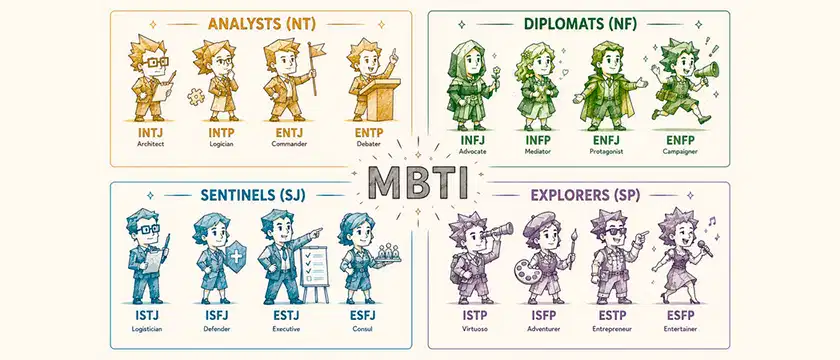
This approach is useful beyond astrology, too. For example, the MBTI test offers a way to reflect on your preferences, but its result shouldn’t be treated as a complete or unchanging portrait of you. If you’d like to practise evaluating claims, try the quiz “Can You Tell Fact from Myth?”.
An entertainment quiz is not a substitute for consulting a mental health professional.
Frequently Asked Questions
Does the Barnum effect mean all horoscopes are deliberately misleading?
No. The effect describes a feature of how we perceive things, not the author’s intentions. A horoscope might be created for entertainment or as a sincere attempt to offer guidance; its accuracy is a separate question.
Is there evidence that your zodiac sign determines your personality?
There’s no reliable scientific evidence that your zodiac sign determines your personality or predicts compatibility. Resembling a description doesn’t, by itself, establish a cause-and-effect relationship.
Why does a horoscope sometimes seem uncannily accurate?
It could be a coincidence, broad wording or selective attention to predictions that came true. To assess its accuracy, it’s important to count the predictions that didn’t come true, too.
Can you read horoscopes and still think critically?
Yes. You can enjoy the imagery and the conversations while remembering that a prediction isn’t proof—and shouldn’t make important decisions for you.
The Stars as a Conversation Starter
The Barnum effect is a reminder that recognizing yourself in a text doesn’t make it a personal prediction. Approach astrology with curiosity and think about which situations matter to you: take a zodiac sign compatibility test. You can choose signs or skip that part, and use the questions as a starting point for a conversation about your relationship.
For more fun and thought-provoking ideas, check out these other quizzes: