How socionics works
Socionics grew out of Carl Jung’s ideas about psychological types. It looks at people through four pairs of preferences. These aren’t rigid opposites: in different circumstances, we can all show both sides.
- Extraversion and introversion. In socionics, extraverted types are more oriented toward external objects and what’s happening around them, while introverted types focus more on the relationships between objects and their inner impressions. This isn’t simply a matter of being outgoing or shy.
- Sensing and intuition. Sensing is associated with concrete sensations, comfort, and the practical side of life; intuition with possibilities, images, and how things change over time.
- Logic and ethics. Logic focuses on patterns, structure, and efficiency; ethics on emotions, relationships, and values. A logical person still has feelings, and an ethical person can reason consistently.
- Rationality and irrationality. The former is associated with relying on judgments and decisions, the latter with perceiving what’s happening and how it changes. This isn’t a measure of how sensible or organized someone is.
These preferences combine to form a type abbreviation, such as ILE—intuitive-logical extravert. Alongside letter codes, socionics uses conventional names borrowed from historical and literary figures. They’re there for convenience; they don’t mean you have to resemble your namesake.
The 16 socionic types: brief descriptions and examples
Below are common portrayals of the types in socionics. Think of them as sketches, not portraits you’re supposed to fit. Behavior is shaped by experience, circumstances, skills, and personal situations.
Don Quixote — intuitive-logical extravert, ILE
Interested in ideas, possibilities, and unexpected connections between things. In a conversation about renovating a home, they might suggest several unconventional ways to use the space. Coming up with a concept may be more appealing than spending a long time on repetitive finishing work.
Dumas — sensory-ethical introvert, SEI
Pays attention to the atmosphere, comfort, and the emotional state of people around them. When friends are coming over, they might think ahead about where everyone will feel comfortable and what to serve with tea. Their care doesn’t necessarily come in words.
Hugo — ethical-sensory extravert, ESE
Descriptions of this type emphasize emotional involvement and attentiveness to people’s everyday needs. At a family celebration, for example, they might keep the conversation lively and make sure no one goes without a snack.
Robespierre — logical-intuitive introvert, LII
Wants to understand the principles at work and build a consistent picture. Faced with a new task, they might first clarify the definitions and check whether any of the requirements contradict each other. Being reserved doesn’t mean they lack emotion.
Hamlet — ethical-intuitive extravert, EIE
Attuned to the emotional side of events and how they might unfold. While preparing a presentation, they may think not just about the facts but also about the impression they’ll make and how the audience might react to change.
Maxim Gorky — logical-sensory introvert, LSI
Pays attention to order, rules, and applying them consistently. On a group project, they might suggest a clear division of responsibilities and notice when not everyone is keeping to the agreement. Preferring structure doesn’t make someone inflexible.
Zhukov — sensory-logical extravert, SLE
Typical descriptions portray this type as action-oriented, focused on resources and getting results. If travel plans suddenly fall through, they might quickly look for another route and take charge of the arrangements. But decisiveness can look different in different situations.
Yesenin — intuitive-ethical introvert, IEI
May pay attention to moods, images, and the way events unfold over time. When discussing changes in a team, they’re more likely to notice the overall atmosphere and possible consequences than jump straight to a list of technical tasks.
Napoleon — sensory-ethical extravert, SEE
In socionics, this type is associated with initiative, attentiveness to people, and the ability to respond to a concrete situation. At an event, for example, they might quickly get to know the attendees and suggest doing something together.
Balzac — intuitive-logical introvert, ILI
Enjoys thinking through future prospects and possible risks. Before making a big purchase, they might compare options, look into the terms, and ask whether they’ll still need the item a year from now. Caution in this type’s description doesn’t mean pessimism.
Jack London — logical-intuitive extravert, LIE
Pays attention to efficiency, possibilities, and the practical value of ideas. On a work project, they might suggest testing a hypothesis with a small experiment before investing a lot of effort in a full launch.
Dreiser — ethical-sensory introvert, ESI
Values personal principles, trust, and concrete actions. If someone they know breaks an agreement, they might consider not only the consequences but also what it says about their relationship.
Stirlitz — logical-sensory extravert, LSE
Descriptions of this type highlight practicality, organization, and attention to the quality of the result. When planning a move, they might make a to-do list, compare removal companies, and get packing materials ready in advance.
Dostoevsky — ethical-intuitive introvert, EII
Focuses on values, relationships, and people’s potential. During an argument, they might try to understand both sides’ motives and find a way to discuss the problem without trading accusations.
Huxley — intuitive-ethical extravert, IEE
Notices new possibilities and takes an interest in people. Hearing about an acquaintance’s unusual hobby, they might immediately think of a few ways to develop it and offer to introduce them to like-minded people.
Gabin — sensory-logical introvert, SLI
Pays attention to comfort, the qualities of objects, and practical solutions. When setting up a workspace, for example, they might start by finding a comfortable chair and good lighting, then clear away anything that makes it harder to focus.
How to take a socionic type test and understand your result
Answer based on what you usually do, not the kind of person you’d like to be. Think about different situations: how you act at work, at home, and around people close to you can vary quite a bit. If both options sound like you, choose the one that comes more naturally and more often.
When you get your result, read the explanation as well as the type name. Notice which traits you recognize in yourself and which ones you’re unsure about. For instance, an interest in planning doesn’t by itself prove that you belong to a particular type—it may be a habit shaped by your job or family responsibilities.
If the result doesn’t seem quite right, look at the descriptions of neighboring types and come back to the questions later. Different questionnaires can give different answers, and no set of response options can capture the full complexity of real-life behavior. A type is a hypothesis for self-reflection, not a label.
For comparison, you could take the Jung personality type test or the online MBTI test. These approaches share some ideas, but they’re not identical: scales and letter codes that sound alike don’t always mean the same thing.
Socionic types and relationships: what to keep in mind
Socionics offers descriptions of how types interact, including the idea of duality—combinations that are thought to complement each other. But matching types don’t guarantee closeness, and a supposedly “incompatible” pairing doesn’t predict conflict. Relationships depend on concrete actions, respect for boundaries, and a willingness to work things out.
Use differences as a reason to talk. For example, one person may want to plan every day of a vacation in advance, while the other would rather leave some days open. Instead of arguing over whose type is right, you could agree to book your accommodation early and choose what to do once you’re there based on how you feel.
If you’d like to take a closer look at your communication habits, try the social energy test. Its result, too, is best compared with your own experience rather than treated as a final verdict.
Frequently asked questions
Is socionics scientifically proven?
Socionics isn’t considered a widely accepted scientific method for assessing personality. You can use its descriptions to reflect on yourself, but not to evaluate someone when hiring, providing treatment, or making other important decisions. A test doesn’t replace a consultation with a professional.
Can your socionic type change?
In socionics, type is generally considered stable, but test results can change. Your answers may be affected by your circumstances, mood, experience, and how you interpret the questions. Different results don’t necessarily mean anything unusual has happened to you.
How is socionics different from MBTI?
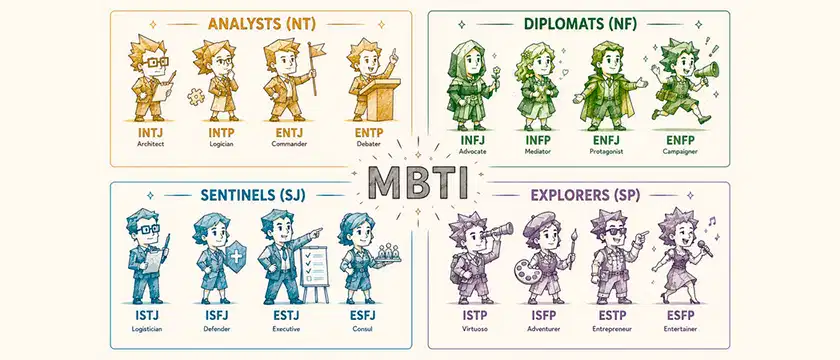
Both typologies draw on Jung’s ideas and identify 16 types, but they developed separately and use different models. Don’t automatically translate a socionic type into an MBTI type just because the letters or scale names match.
Is there a best socionic type?
No. No type makes someone smarter, kinder, or more successful than anyone else. You can develop specific skills regardless of your test result, and how you use them depends on your situation and goals.
Where to start getting to know yourself
Socionics offers a way to talk about familiar preferences, but it doesn’t put you in a rigid category. Take the “What’s Your Socionic Type?” test and see which parts of the result really resonate with you.
If you’d like to compare other ways of looking at personality and communication, explore this collection: