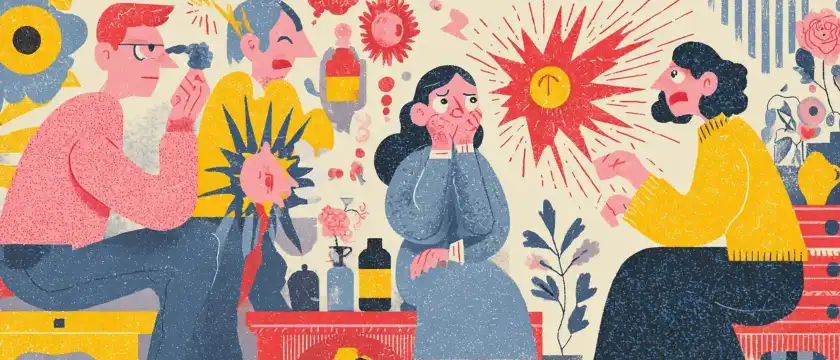
Why We Lose Our Temper: Common Causes
Anger is an emotion; a short temper is a tendency to react quickly and intensely to things that bother you. The reason for a particular outburst isn’t always obvious. For example, you might snap when someone asks you to do the dishes—not because of the dishes themselves, but because you’ve spent all day dealing with other people’s problems and have nothing left to give.
Tension often builds up from several different things:
- Overwork and lack of sleep. When you’re running low on energy, everyday annoyances can feel harder to bear. A conversation that wouldn’t have bothered you yesterday might turn into an argument today.
- Accumulated stress. Deadlines, money worries, or uncertainty keep your attention fixed on problems. An unexpected delay on the way somewhere becomes the last straw, rather than the sole reason for your anger.
- Feeling threatened or treated unfairly. Criticism, mockery, or a broken promise can feel like an attack. But the other person’s intentions aren’t always what we assume they are.
- A habitual way of reacting. If people in your family tended to shout when they disagreed, that way of communicating may feel familiar. It isn’t set in stone: you can change how you respond.
- Other feelings beneath the anger. Sometimes hurt, fear, shame, or helplessness lies behind a sharp response. It’s useful to work out what you’re feeling, because what helps will depend on the emotion.
Irritability can also be affected by alcohol, some medications, and health problems. If you notice a change that doesn’t go away, talk to a doctor rather than trying to work out the cause on your own.
How to Stop Getting Angry in the Moment
The goal isn’t to become unshakable in a second, but to avoid acting at the peak of an emotion. Managing anger starts with creating a small pause between what you feel and what you do. Try this sequence:
- Notice the early signs. Some people clench their jaw or tense their shoulders; others start breathing faster or feel the urge to interrupt. Identify two or three signs you experience: they can warn you that an outburst is coming before your voice gets louder.
- Name what’s happening. Tell yourself: “I’m angry, and I want to respond harshly.” This won’t make the emotion disappear, but it can help separate the feeling from the action. It’s okay to feel angry; insulting someone or breaking things is a separate choice, and one you’re responsible for.
- Take a break. Say: “I’m too irritated to keep talking right now. Let’s come back to this in half an hour.” If you can, go to another room or take a short walk. It’s important to say when you’ll return to the conversation: a break shouldn’t turn into silent treatment.
- Help your body calm down. Take a few gentle breaths, making each exhale longer than the inhale; relax your shoulders and place your feet flat on the floor. If a breathing exercise makes you feel worse, don’t force it: you could go for a walk or focus on objects around you instead.
- Check your assumptions and choose what to do next. Instead of “They’re ignoring me on purpose,” try: “I haven’t heard back, and I don’t know why.” Then decide what might help: asking what happened, requesting support, or waiting before replying.
For example, someone sends you feedback about your work at the end of the day. You don’t have to respond right away: save a draft, step away from the screen, and come back to the message later. If it isn’t urgent, you’re allowed to take time to calm down first.
If you’re at risk of hitting someone or hurting yourself, stop the argument, move away from other people and dangerous objects, and contact your local emergency services for urgent help. In that moment, safety matters more than figuring out who’s right.
How to Be Less Short-Tempered in Everyday Life
A one-off technique can help you get through an intense moment, but lasting change starts with noticing situations that keep repeating. For a few days, jot down what happened before an outburst, what you felt, how you responded, and what you actually needed. You don’t have to keep a detailed journal: a couple of sentences after a significant incident is enough.
Your note might look like this: “Someone interrupted me in a meeting. I assumed my opinion didn’t matter and raised my voice. I wanted to finish my point.” Next time, you could prepare a different phrase in advance: “I haven’t finished my point yet—please let me finish.” You’re not forbidding yourself from feeling angry; you’re looking for a more useful response.
Pay attention to the things that make you more vulnerable to irritation, too: how much you’ve slept, whether you’ve eaten or rested, and how many tasks you’ve taken on. Regular sleep, manageable physical activity, and breaks won’t prevent every conflict, but they may help you handle stress. Sometimes the practical step isn’t another calming exercise, but saying no to an extra commitment.
It helps to distinguish what happened from what you think it means. A loved one arriving late is a fact; “They don’t care about me” is an assumption. Asking what happened and explaining how you feel is usually more productive than arguing with a guess. At the same time, repeated lateness may be a real problem that you need to work out together.
If it’s hard to spot a pattern, try the “What Most Often Throws You Off Balance?” quiz. You can use the result as a prompt to observe yourself, not as a definitive explanation for your irritation.
How to Talk About Anger and Make Things Right After an Outburst
A calm conversation doesn’t mean agreeing with everything or hiding your frustration. It helps you explain the problem in a way the other person has a chance to hear. Start with a specific action, not a judgment about who they are.
Instead of “You never respect me,” you could say: “When a meeting is rescheduled without warning, I get angry because I have to change my plans. Please let me know about changes in advance.” This gives the facts, the feeling, and a request you can discuss. The other person can explain their side, and you can look for an arrangement that works for both of you.
If you’ve already lost your temper, don’t pretend nothing happened. Acknowledge exactly what you did without making excuses: “I raised my voice and interrupted you. That wasn’t okay. I’m sorry.” Then ask what would help make things right, and think about what you’ll do differently next time. An apology doesn’t mean the other person has to forgive you straight away, but it shows that you’re willing to take responsibility.
If arguments keep happening, it can help to agree on some ground rules in advance: for example, not continuing a conversation once voices are raised and returning to it after a break. If the other person threatens or hurts you, the priority isn’t finding the perfect words—it’s keeping yourself safe and getting support.
To look at your communication habits from another perspective, try the toxic communication quiz. To reflect on how you respond to feelings and responsibility, try the emotional maturity quiz. Treat the results as food for thought, not as a label.
Frequently Asked Questions
Can I stop feeling angry altogether?
Getting rid of anger completely isn’t a realistic goal. It’s far more useful to learn to recognize it, understand what’s behind it, and express your frustration without threats or insults.
Why do I get angry over little things?
A small annoyance can be the last straw when fatigue, tension, or unresolved problems have already been building up. Look not only at the final trigger, but also at what’s been going on throughout the day.
Do I need to suppress my anger to avoid arguments?
You don’t have to stay silent about something important. You can first take the heat out of the situation, then discuss what happened and ask for things to change. Suppressing your feelings and lashing out aren’t your only options.
When should I talk to a professional?
If outbursts keep happening, frighten you or other people, lead to threats or harm, or cause problems in your relationships or at work, talk to a psychologist, psychotherapist, or doctor. You should also see a doctor if your irritability came on suddenly or is accompanied by other noticeable changes in how you feel. An online quiz is not a substitute for professional advice.
Where to Start
You can explore your short temper without blaming yourself: notice your body’s signals, take a pause, and think through what happened once your emotions have settled. Take the main “Are You Short-Tempered or More Even-Tempered?” quiz to start noticing your reactions.
These quizzes can help you learn more about your emotions and communication habits: