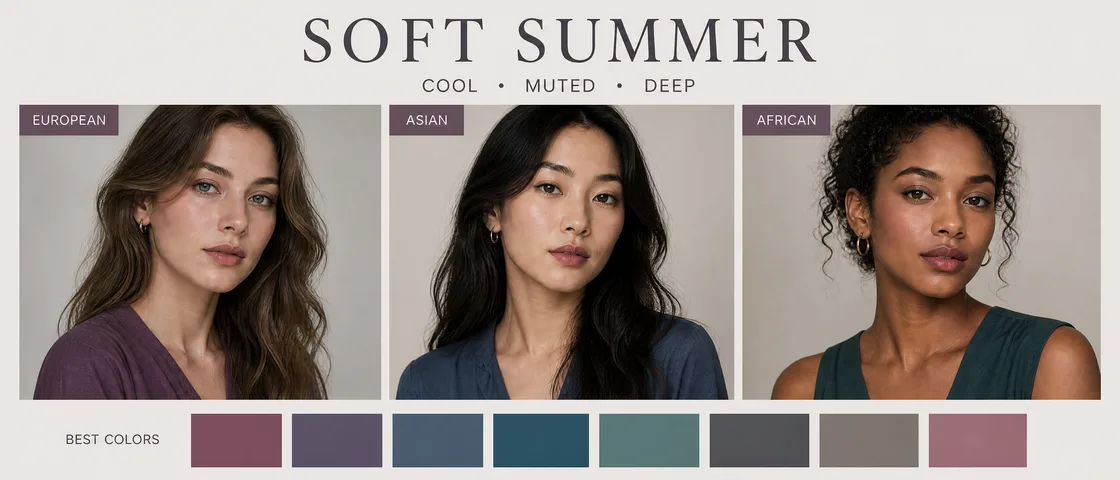
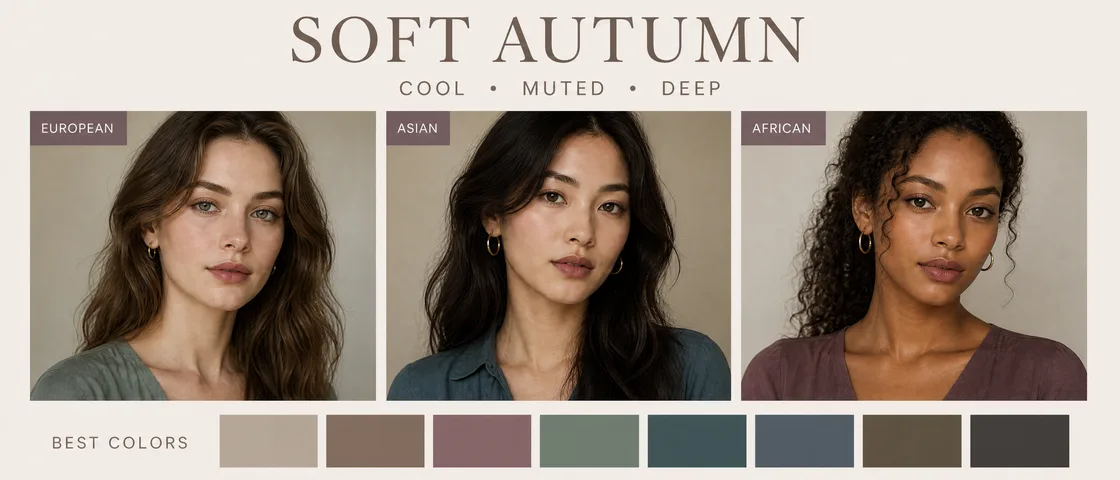
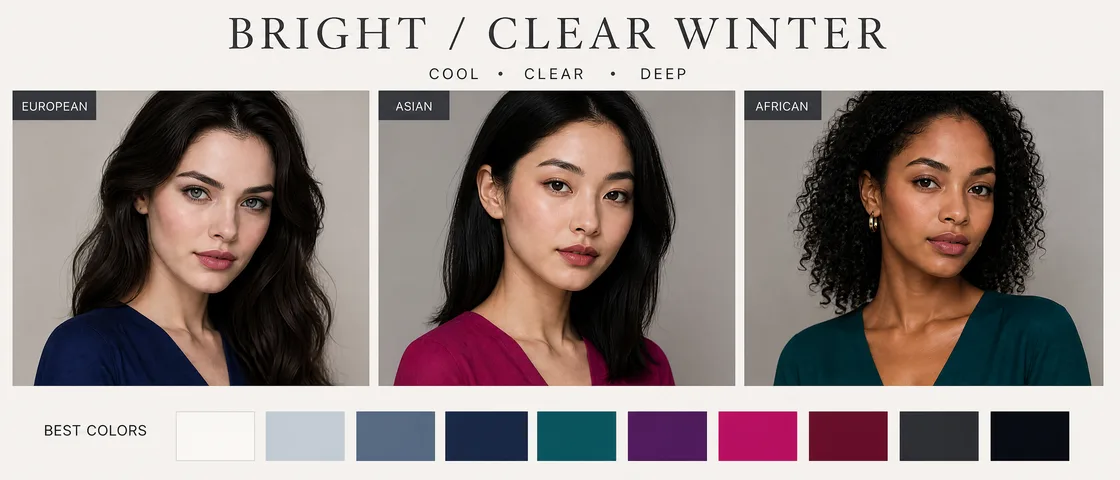
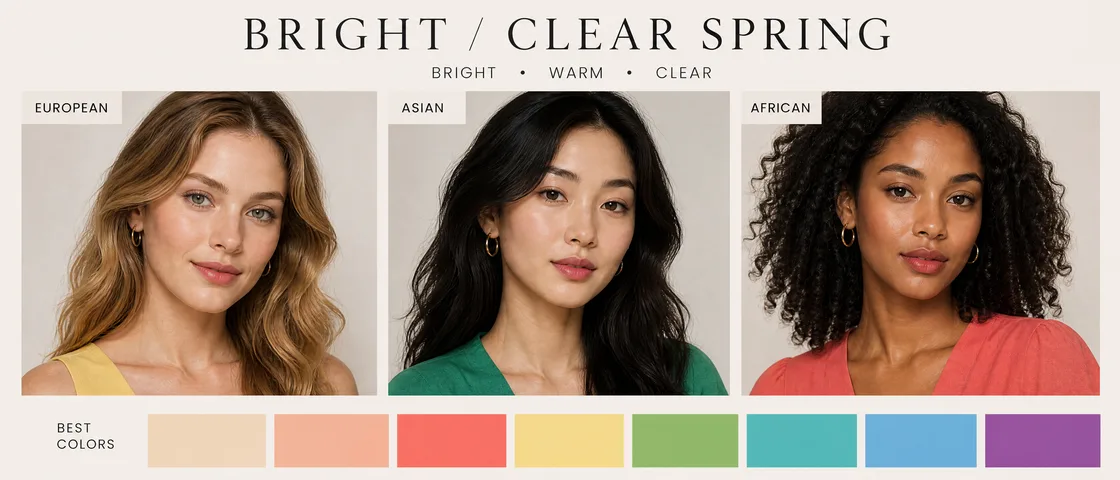
The Soft Summer color type is characterized by soft, muted shades that create a harmonious and natural look. Learn how to select colors that enhance your appearance.
Soft Summer: what this color type looks like and how it is useful in real life
If you want to understand which colors make the face look fresh and which ones draw attention into the shadows, the analysis of the Soft Summer color type will be especially useful. This type usually looks soft, calm, and slightly muted: the image does not scream but beautifully "gathers" into a cohesive, delicate picture. Colors next to such an appearance work better not due to brightness, but due to subtlety, a light coolness, and moderate saturation.
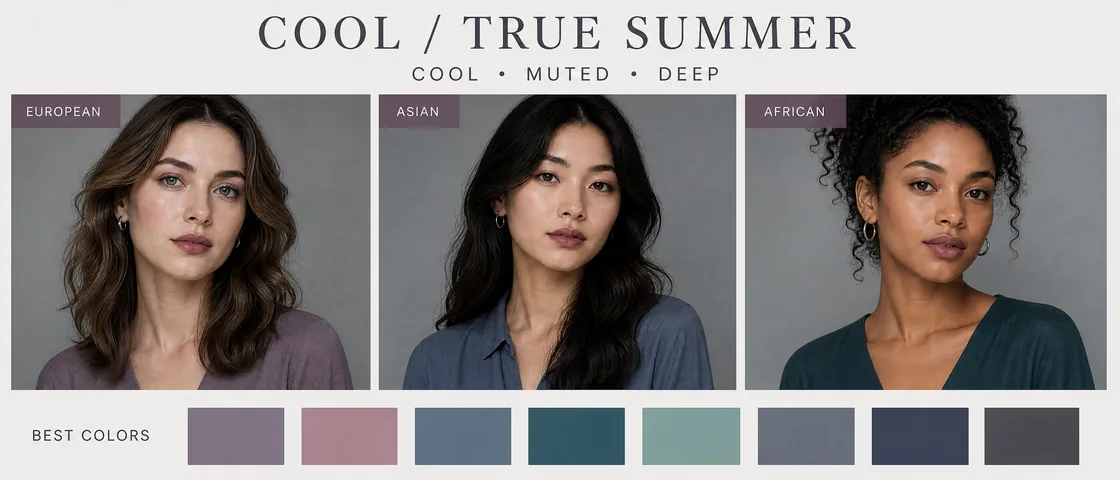
It's important to remember: soft summer is found in people with different skin tones — light, olive, medium, tan, and even darker. Hair and eyes can vary just as much. The essence is not in the "lightness" of the appearance, but in how temperature, contrast, depth, and saturation combine together.
Brief portrait of the color type
Temperature: most often neutral-cool, with a light coolness.
Contrast: low or medium-low. The appearance usually does not favor too sharp combinations.
Depth: medium or softly medium. Purely light and very dark solutions may clash with the face.
Saturation: muted, smoky, not bright.
Overall impression: softness, calmness, naturalness, delicate elegance.
Soft summer often gives the impression of a person who suits not sharp contrasts, but smooth transitions. The appearance seems to favor a misty, slightly watercolor palette: without neon, without harsh graphics, without overly warm "goldenness."
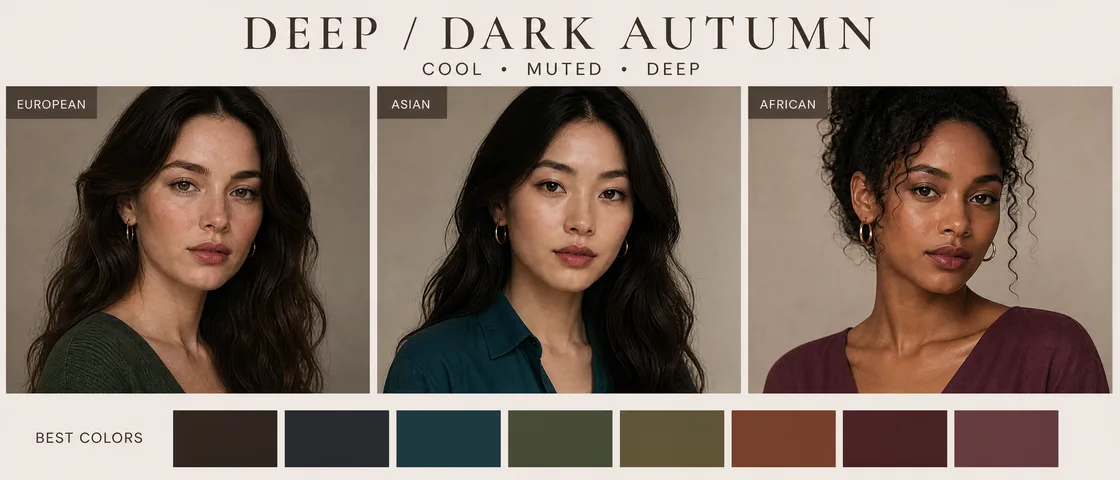
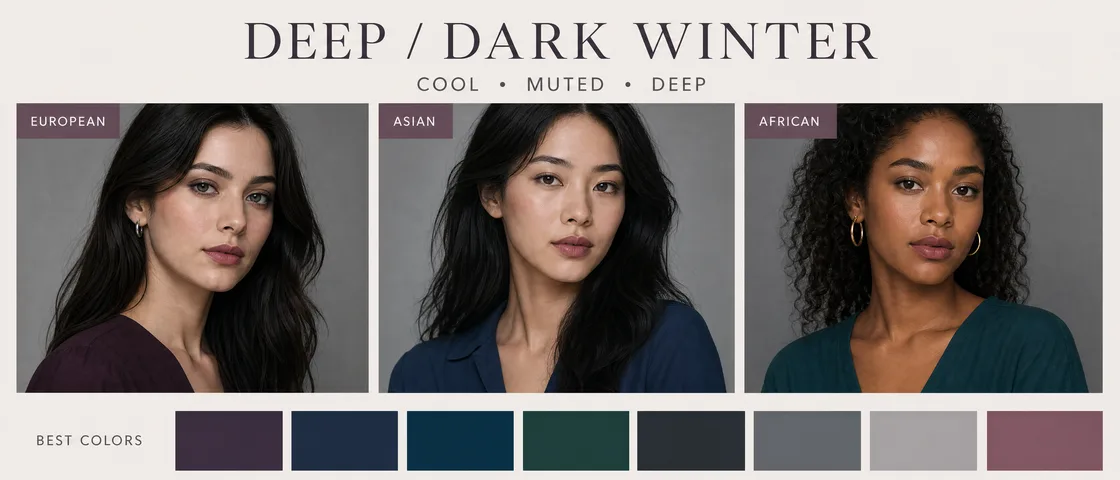
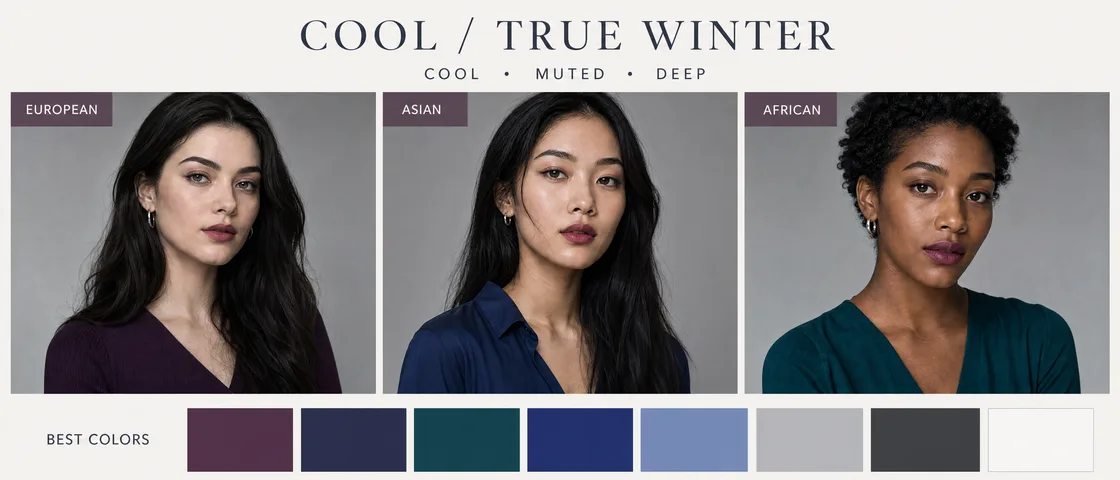
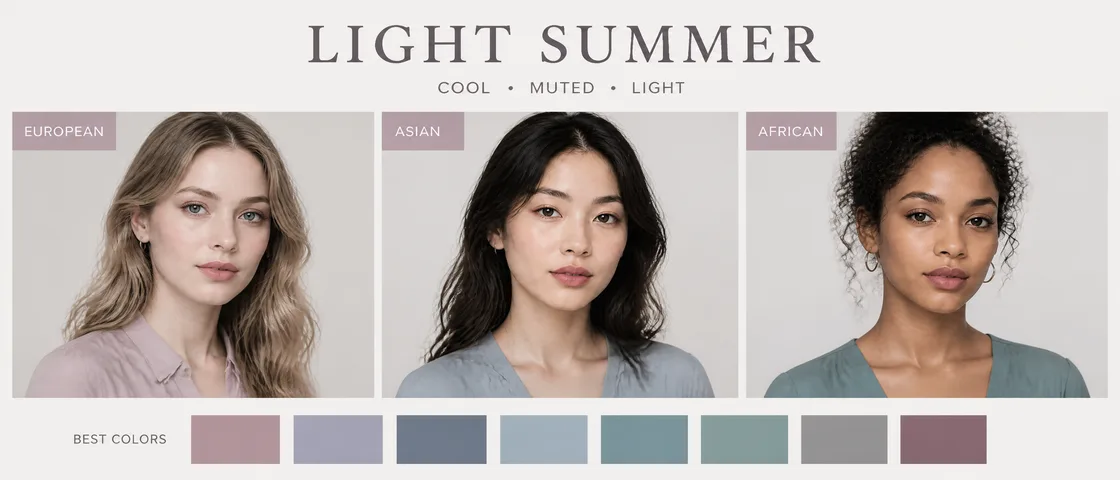
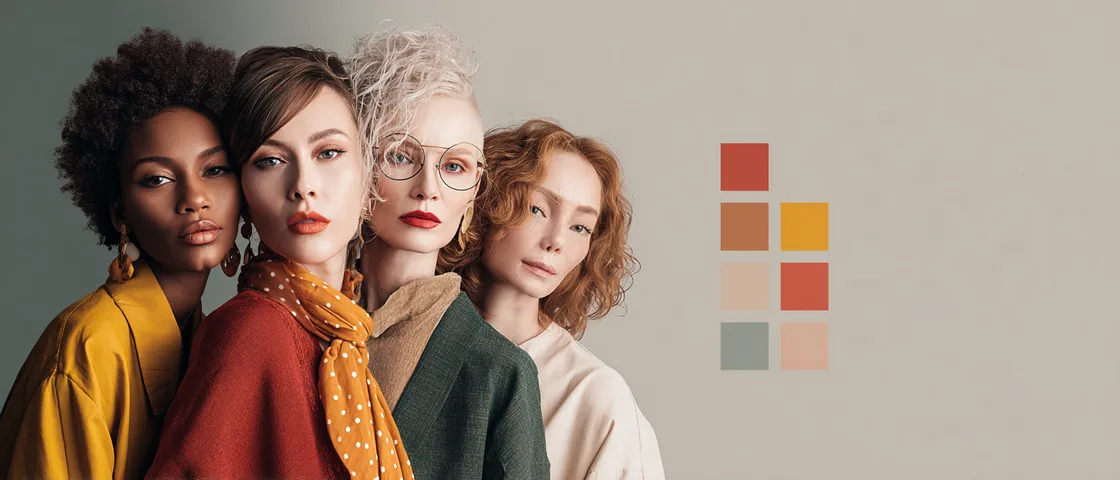
Visual guide to the palette and style

How to understand if this is your color type
Recognizing yourself in soft summer is helped not by individual details, but by their combination. For example, the skin can be light, neutral, or darker, hair — blond, chestnut, ash-dark, sometimes with a soft golden-ash tint, and eyes — gray-blue, gray-green, hazel, smoky-brown, or other calm shades. But this is not a mandatory set.
Pay attention to the signs:
You suit muted shades more than pure and bright ones.
Too contrasting combinations often look separate from your face, rather than together with it.
Purely warm, "sunny" colors can make the skin look more tired or yellowish.
Very cold, icy colors sometimes look too harsh.
The face benefits when there is softness nearby: in fabrics, makeup, hair colors, accessories.
If you feel most comfortable in calm, slightly dusty shades and notice that brightness "overpowers" your appearance, soft summer may very well be your direction.
Best colors for soft summer
The palette of this color type is built on cool, muted, soft, and medium-depth shades. They should not be too transparent and "icy," but also should not lean into warm, sunny richness.
Basic colors
Light shades
dusty rose;
cool pale lavender;
gray-blue;
smoky mint;
milky gray-beige;
light lavender-gray.
Dark shades
Accent colors
dusty rose;
gray-violet;
soft turquoise-gray;
cool muted malachite;
berry, but not neon;
blue-green with a haze.
Neutral colors
Colors with a "dusty" effect look best on soft summer. Imagine not a pure bright paint, but a shade that seems to have a bit of gray or mist added.
Colors to be cautious with
This is not a strict prohibition, but a hint at which shades may weigh down the look or draw attention away from the face.
Too bright neons — they often look separate from a soft appearance.
Pure warm orange and golden tones — can give a feeling of excess yellowness.
Very dark black — can make features harsher than necessary.
Pure snow white — often looks too sharp.
Acidic pinks, lime greens, bright blues — often clash with the softness of the appearance.
Highly contrasting combinations — for example, black and white blocks near the face.
If you like a bright color, you can keep it in the look, but it's better to use it further from the face: in a bag, shoes, the lower part of the outfit, or a small accent.
Clothing and style
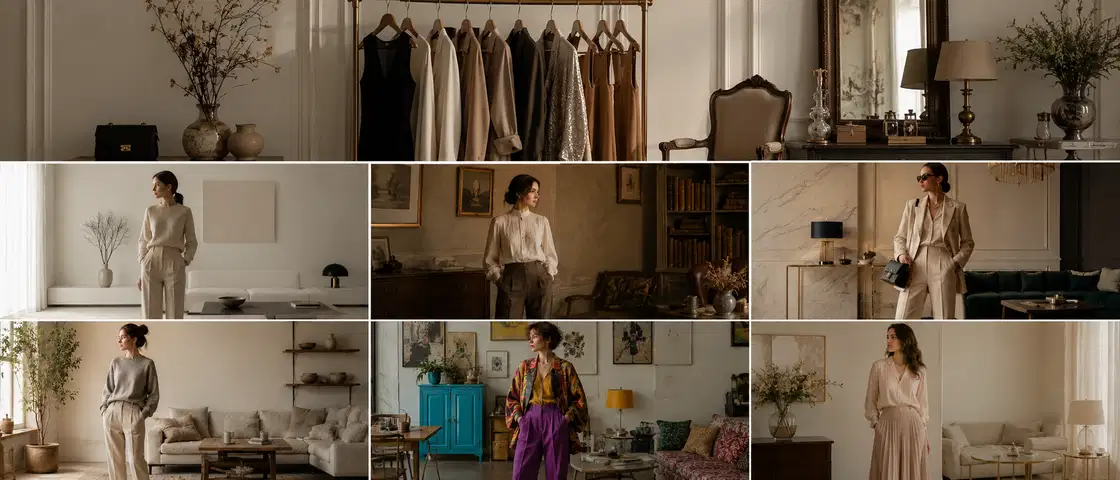
Soft summer usually suits directions where there is smoothness, balance, and absence of harsh lines. Particularly successful are casual, smart casual, natural, romantic, minimal with soft forms, and urban in a muted palette. The main thing is that the clothing should not be too contrasting and "angular" in color.
What works well
Casual: soft taupe sweater, straight jeans in muted blue, gray-blue sneakers.
Smart casual: smoky blue blazer, light blouse with a cool undertone, graphite-colored pants.
Minimal: monochrome sets in gray-beige, gray-blue, plum palette, without sharp contrasts.
Romantic: flowing fabrics, soft drapes, dusty rose, lavender, gray-blue.
Natural: calm earthy, but not reddish tones, matte textures, relaxed silhouettes.
Urban: graphite, muted denim, gray-blue, soft layered looks.
Sporty chic: smoky blue, gray-mint, lavender-gray, neat sneakers without sharp neon inserts.
Examples of looks
Gray-blue shirt + taupe pants + silver sneakers.
Dusty rose dress + soft graphite cardigan + gray sandals.
Lavender top + jeans in muted blue + gray-beige bag.
Eggplant sweater + dark gray straight pants + matte metal jewelry.
Fabrics are also important: soft summer often suits matte, slightly velvety, fluid, or thin textures. Too shiny surfaces sometimes make the look harsher.
Makeup
Makeup for soft summer is better built on smoky, cool, and medium-muted shades. The goal is to emphasize natural softness, not to change the face beyond recognition.
Tone
Tonal products with a neutral or slightly cool undertone, without strong yellowness and without too dense a matte effect, look good. A light, even coverage often looks better than heavy.
Blush
dusty pink;
cool pink-beige;
soft rose;
muted berry powder;
cool pinkish-lilac.
Lips
pink-taupe;
berry, but not bright;
muted rose;
plum nude;
cool dusty raspberry.
Eyes
It's better to avoid the effect of overly sharp graphics: very black lines, dense gloss, strong metallics, and bright neon lips. They can make the makeup heavier than necessary. Blending, soft transitions, and translucent textures look much more harmonious.
Hair color
For soft summer, shades that support natural smokiness are successful: ashy blond, cool blond, soft chestnut, cool mocha, neutral dark brunette, muted walnut. If you want a lighter effect, it's better to choose not yellow blonde, but calmer, softer, and more natural directions.
Coloring techniques with smooth transitions, where there is no sharp line between the roots and the length, look good. Soft balayage, delicate highlighting, smoky toning, cool and neutral nuances are suitable.
Too coppery, bright golden, reddish, and very contrasting black shades often look less successful. They can clash with the softness of the face or make features harsher. If you want to experiment, it's better to go towards muted depth or soft coolness rather than pure brightness.
Jewelry and accessories
Soft summer usually suits jewelry with a cool, soft shine. Silver, white gold, platinum shade, matte metal, soft pink metal look good. Too yellow and glossy gold may be less harmonious, especially near the face.
Glasses: thin frames in gray, graphite, smoky blue, taupe color.
Bags: gray-beige, graphite, dusty blue, plum, muted brown without reddish tones.
Scarves: lavender, dusty pink, gray-blue, soft turquoise, cool taupe.
Prints: non-contrast, watercolor, blurred, with smooth patterns, small or medium scale.
Textures: matte, slightly fleecy, velvety, softly draping.
Mini wardrobe capsule
An example of a simple capsule for soft summer — without overload and with good compatibility:
Coat or trench in gray-beige taupe.
Blazer in smoky blue color.
Dusty rose sweater.
Shirt in gray-blue shade.
T-shirt in soft white-gray or cool milky shade.
Pants in graphite or muted blue color.
Jeans in soft medium blue without strong distressing.
Skirt or dress in lavender-gray, plum, or gray-green shade.
Cardigan in taupe or smoky purple color.
Universal bag and shoes in soft gray, graphite, or cool beige-gray.
Such a capsule is easily assembled into outfits for everyday, work, and more relaxed evening outings.
Common mistakes
Too bright items near the face. They can overshadow soft features.
Purely warm palette. Reddish, orange, golden shades sometimes add unnecessary heaviness.
Excessive contrast. For example, a very dark top and very light bottom near the face.
Harsh black. It often makes the appearance more severe than desired.
Too icy colors. They can look distant and dry.
Overly shiny fabrics and makeup. Metallics, gloss, and dense shimmer often overload the look.
Focusing only on skin lightness. The color type is determined not by a single feature, but by the overall combination of appearance.
Brief conclusion
Soft summer is about calm harmony, soft coolness, and muted beauty. This color type does not require strict rules: its task is to help quickly find shades in which the face looks fresh, and the image is complete and natural. If you learn to notice how temperature, contrast, and saturation work on you, choosing clothes, makeup, and accessories will become much easier and more enjoyable.
FAQ
1) Can this color type be found in people with dark skin?
Yes, it can. Soft summer is defined not by skin color itself, but by how overall appearance is soft, muted, and slightly cool in the combination of shades.
2) Can black be worn?
Yes, if you like it. But near the face, black is usually better used sparingly: in the lower part of the outfit, in shoes, bags, or as a small accent. Softer graphite or dark blue often looks more delicate.
3) What if I like a color that is not in the palette?
It's not necessary to give it up. Try wearing your favorite shade further from the face, reduce its area, soften it with neutral items, or choose a more muted version of this color.
4) How do I know if my undertone is warm or cool?
Look at which jewelry, fabrics, and shades near your face make your skin appear more even and fresh. If silver, gray-blue, and dusty pink shades work better, you may have a cool or neutral-cool undertone. If golden and peach tones work better, your undertone may be warmer. However, for an accurate conclusion, it's important to look at everything together, not just one test.
5) Can you change your color type by dyeing your hair or tanning?
Dyeing and tanning can significantly change the visual impression, but they do not completely change your natural color type. They only temporarily shift the balance of contrast, temperature, and depth. Therefore, it's better to choose hair and skin tones that support your natural harmony rather than clash with it.