What is creative thinking, and why does it matter?
Creative thinking is the ability to find new and suitable solutions. “New” doesn’t have to mean a world-changing breakthrough: an idea can be new to you or your team. It’s suitable when it takes the task and its real-world constraints into account.
For example, you’re running out of space to store books at home. Buying another bookcase is a sensible option, but it’s not the only one. You could rearrange the furniture, use the space above the door, swap books you’ve read with friends, or put a small shelf in the hallway. Not every suggestion will be convenient, but you’ll have more options to choose from.
Creative thinking is useful when planning a trip, solving work problems, organizing your studies, and even making dinner with whatever’s left in the fridge. It doesn’t rule out logic: first, you widen the range of possibilities, then analyze them and choose a realistic option.
You don’t have to wait for inspiration or think of yourself as a special kind of person. Exploring different ways to solve problems and practicing deliberately gives you more material to combine in new ways. Mistakes can be useful too, as long as you can figure out what didn’t work.
Creativity exercises: seven ways to get started
For most of these exercises, all you need is paper or the notes app on your phone. Pick one that sounds interesting and try applying it to a real problem. Don’t expect a brilliant result right away: gather options first and evaluate them later.
1. Find ten uses for an everyday object
Pick up a box, mug, or scarf and think of ten ways to use it. A box could become an organizer, a prop for a home play, or a drawing template. Once you’ve listed the obvious options, look for less familiar ones that are still safe. Even if an idea seems too strange, write it down: it may point you toward something practical later.
2. Change a constraint
Define a problem, then add a constraint. For example: how could you get friends together without going to a café, stick to a small budget, or hold an event in a small room? A constraint forces you to move beyond your usual first answer. Then remove it and see which of the ideas you came up with might work under normal circumstances too.
3. Combine unrelated things
Choose a random word and try to connect it to your problem. Say you want to make cleaning at home less tedious, and your random word is “train.” You could imagine each room as a station, plan a route, or play a short musical cue before moving on to the next task. This isn’t a ready-made solution; it’s a way to look at the problem from a different angle.
4. Turn the question around
Instead of asking, “How can we make this meeting productive?” ask, “What would guarantee that it’s a waste of time?” Your list might include having no goal, covering too many topics, or leaving agreements unclear. Now reverse those answers: set a goal in advance, make time for the most important points, and write down next steps. This technique can help you spot obstacles that usually go unnoticed.
5. Draw a mind map
Write the problem in the center of a page and add related words around it. For an idea for a neighborhood festival, these might include “food,” “music,” “neighbors,” “courtyard,” and “exchange.” Draw new branches from each word: “exchange,” for example, might lead to books, plants, or skills. Then choose two or three directions and think about how to combine them into one event.
6. See it through someone else’s eyes
Imagine how different people involved might see the problem. If you’re putting together a shared work document, one person may want to find the conclusion quickly, another may need more detail, and a third may care about examples. Try to account for each perspective: add a brief summary, a clear structure, and a section with explanations. This exercise is especially useful when a solution is meant for other people, not just you.
7. Make a draft and change it
Create the simplest version of your idea: sketch a plan, diagram, announcement, or furniture layout on paper. Then deliberately change one element: cut the text in half, rearrange the steps, or remove one detail. Compare the versions and note what became clearer, more convenient, or more interesting. It’s often easier to work with a draft than to keep trying to perfect an idea in your head.
How to turn ideas into a workable solution
Exercises help you broaden your choices, but creativity doesn’t end with a list of suggestions. To make an idea useful, give it a concrete form and test it in practice.
- Define the problem. Instead of “make the kitchen better,” try: “clear space on the countertop without buying new furniture.” That makes it easier to tell which ideas actually fit.
- Gather options first. Write down several solutions without arguing with each one as you go. For example, put away appliances you rarely use, move the spices, or rearrange the dishes.
- Set criteria. For a kitchen, these might be an affordable budget, easy cleaning, and the option to put everything back where it was. An idea that looks impressive but makes the space harder to use is unlikely to solve the problem.
- Run a small test. Move things around for a few days before drilling shelves or buying containers. Ask anyone else who uses the kitchen to tell you what works and what doesn’t.
- Refine the result. Keep the changes that work, drop the inconvenient ones, and try another option if needed. A test that doesn’t work isn’t proof that you lack ability; it’s information for your next attempt.
If you have too many options, start by narrowing them down to two or three using criteria you’ve chosen in advance. This can help you avoid endless comparisons and move on to action sooner.
Habits that help you think more flexibly
Notice interesting solutions. Save examples of effective signs, schedules, packaging, or ways of explaining a complex idea. Make a note of what you liked about each one: the contrast, the clear structure, or an unusual detail. That way, your collection becomes more than a folder of pictures—it becomes a source of techniques you can adapt.
Change your perspective. If you usually look for ideas only in your own field, explore a neighboring one. A teacher might learn from the design of board games, while an event planner might borrow principles from museum wayfinding. Take inspiration from the underlying idea, not just the look of a solution—for example, breaking a complex process into clear steps.
Separate brainstorming from criticism. When you judge every thought as soon as it occurs, it’s easy to settle for the safest option. First, give yourself time to make a list; then calmly evaluate the ideas for cost, convenience, and possible risks. If you’re working with others, agree in advance on when to discuss drawbacks.
Make room for a break. If you’re stuck, switch to a walk or another simple activity, then return to your notes. A break doesn’t guarantee a flash of inspiration, but it can help you look at your ideas with fresh eyes. It can also help to show a draft to someone else and ask a specific question: “What’s unclear here?” or “Which step seems unnecessary?”
You can explore your interest in visual tasks with the quiz about becoming a designer, and explore spatial thinking and an eye for layouts with the quiz about becoming an architect. The results can help you reflect on your interests, but they won’t make your career choice for you.
Frequently asked questions
Can you develop creative thinking as an adult?
Yes. Adults can learn new techniques, change their usual approach, and learn from feedback. Start with a small problem you genuinely want to solve, and try different options instead of searching for one perfect answer.
How much time should I spend on these exercises?
There’s no single required amount. Start with short sessions a few times a week and choose a pace you can stick with. It’s more important to return to the practice and apply what you learn than to do lots of exercises in one go.
What if my ideas seem obvious?
Write them down, then change a condition: reduce the budget, imagine a different user, or rule out your first solution. Try combining two ordinary options. Unusual ideas often emerge after you’ve listed the obvious ones.
Is it true that creativity comes only from the right side of the brain?
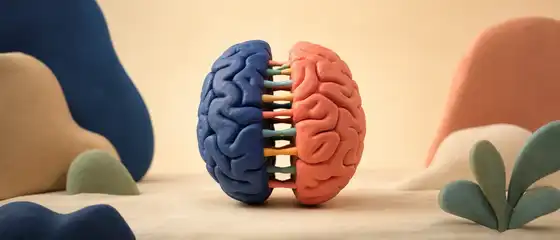
No. The idea that one hemisphere is exclusively creative while the other is exclusively logical oversimplifies how the brain works. Complex tasks involve different brain regions and the connections between them; creative and analytical thinking can complement each other.
Give it a try and learn more about yourself
Choose one exercise and apply it to a problem you’re facing right now. And if you’d like to reflect on your other strengths, take the quiz to discover your greatest talent: it has 20 questions, and your result will suggest one of several possible strengths. The quiz isn’t a substitute for professional advice.
To explore your interests further, take a look at these other quizzes: